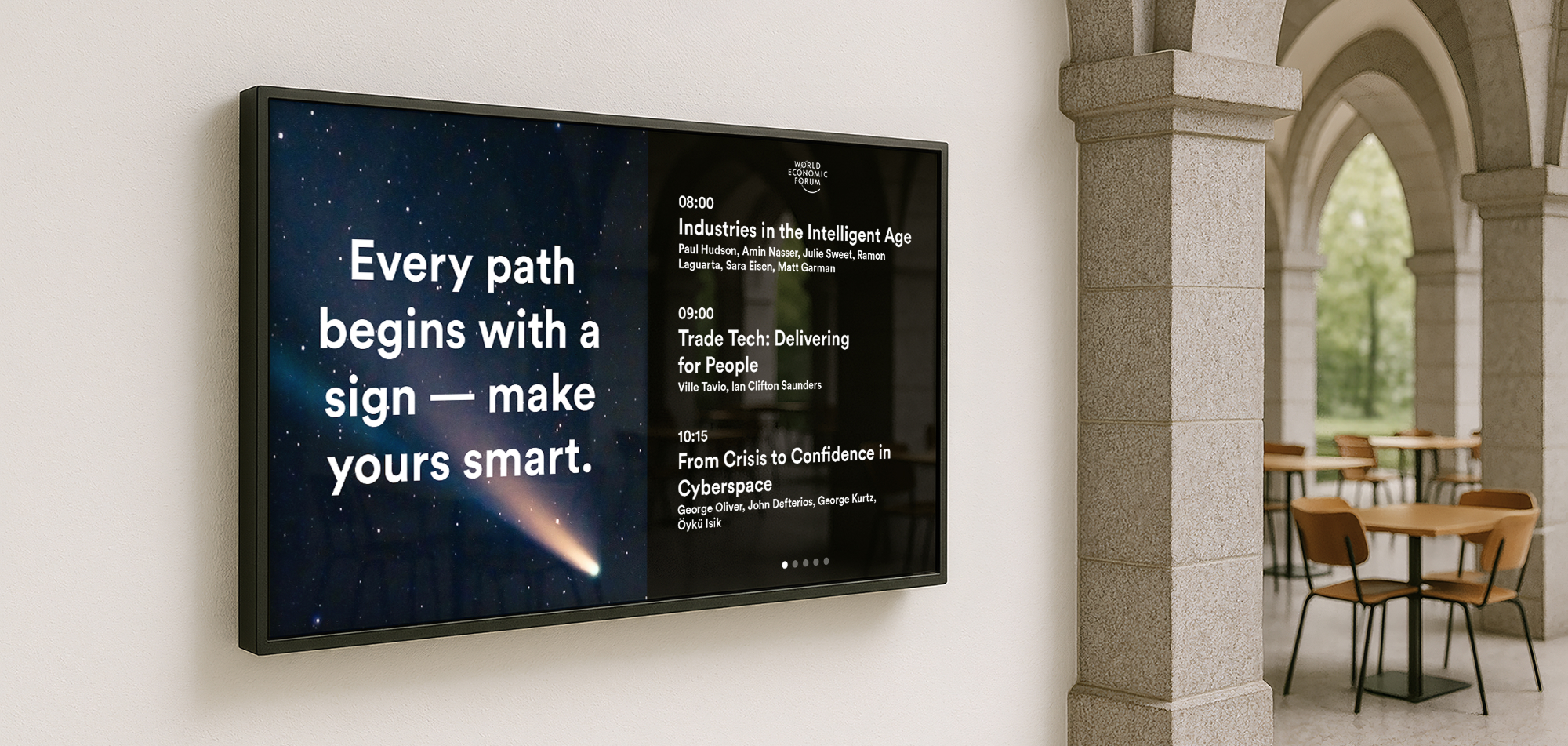
We turn screens into smart, responsive communication hubs.

From public spaces to museums and transit points, our modular software pulls live data, adapts layouts in real time, and scales effortlessly across any display size. Configurable, robust, future-proof.

Our digital signage framework is built for flexibility and longevity. Content flows automatically from your existing systems—event calendars, timetables, CMS entries—into tailored frontends that adjust to each screen’s location and purpose. Administrators manage everything through an intuitive dashboard: add posters, push announcements, schedule segments.

The same core modules power a 10m foyer wall or a compact bus-stop panel. Responsive design, real-time updates, and seamless integration with official data sources keep information accurate and audiences engaged.
Digital Infoscreen
for Museum Rietberg Zurich

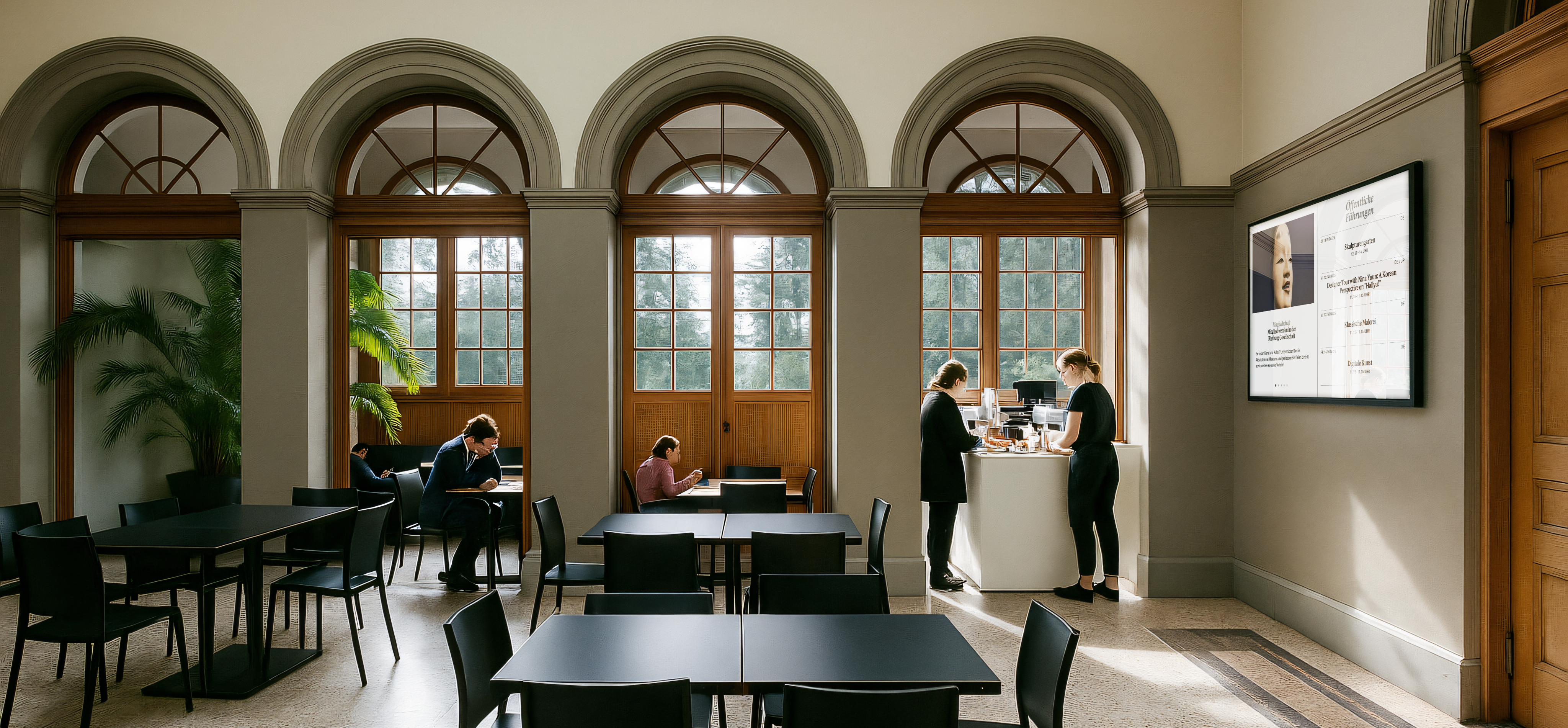
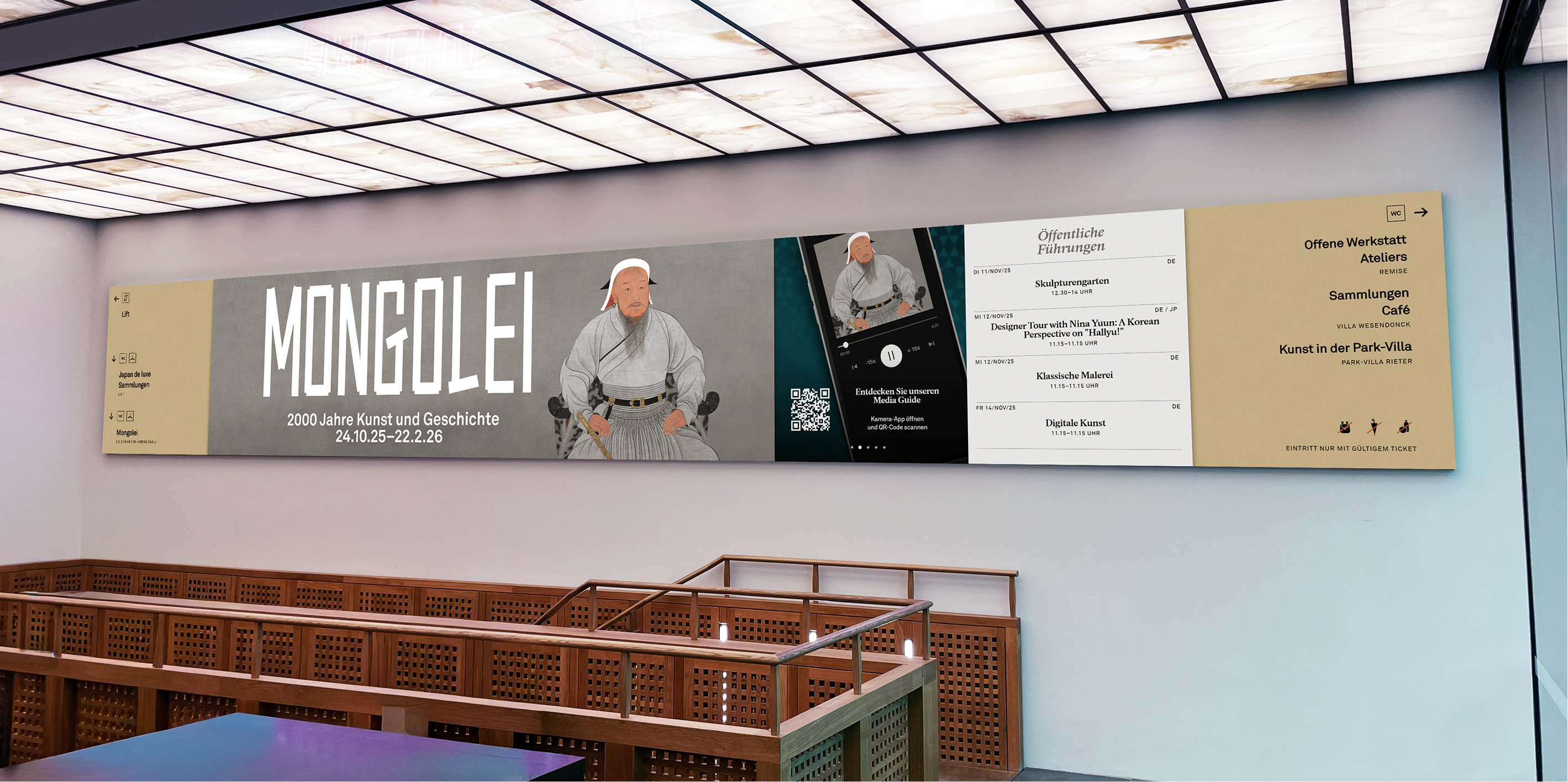
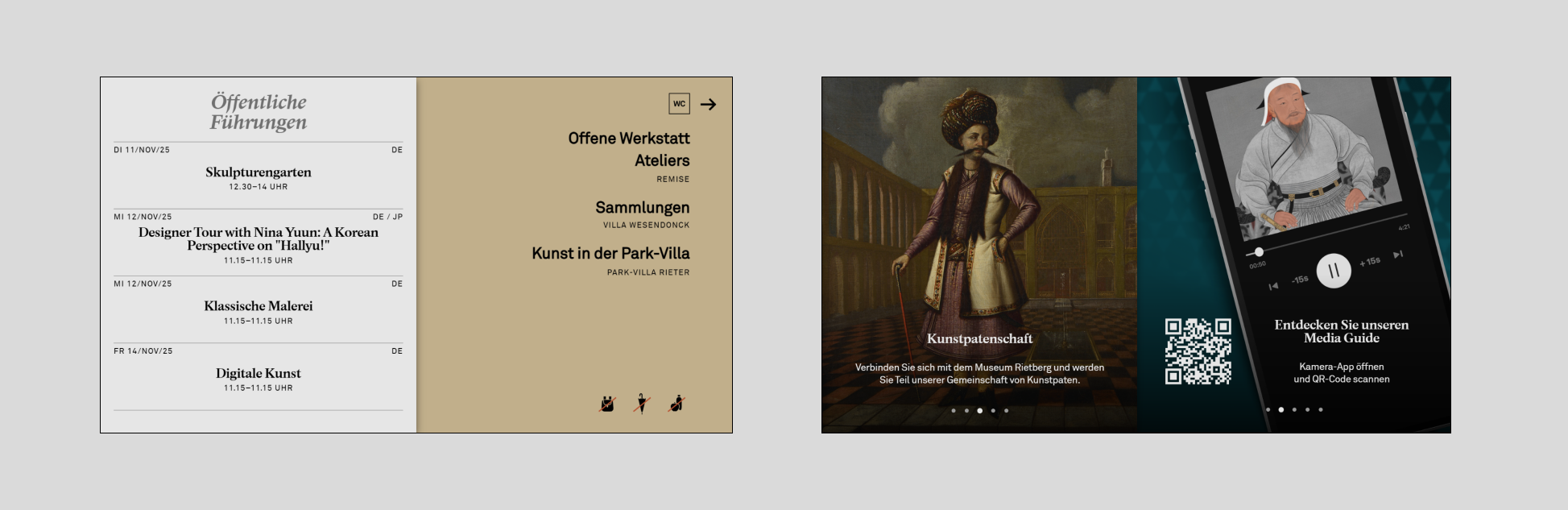
A 10m-wide screen anchors the museum foyer, pulling exhibitions, events, and announcements directly from the internal CMS. Content admins can easily set any media schedule without worrying about layout issues - our software handles all of that and makes sure the final composition always looks good. For special events the entire screen (or only the content sections) can be overridden to display a key visual or video. The result: one content pipeline, multiple screen formats, simple scheduling.

Smooth transitions ensure the very large screen doesn't become distractive or cause motion sickness, but still give the display some playfulness. Multiple languages are served, but not all content needs to be available to all languages.

Modules have been cleverly crafted so that the content can easily adjust to other screen formats. Our framework auto-layouts content into reusable segments that scale down to smaller lobby displays without rework. Every module is fully responsive, ensuring crisp presentation whether on a wall-sized canvas or a portrait tablet.

Need a digital info screen?
Get in Touch

Interactive Smart Screens
for the Fondation Beyeler

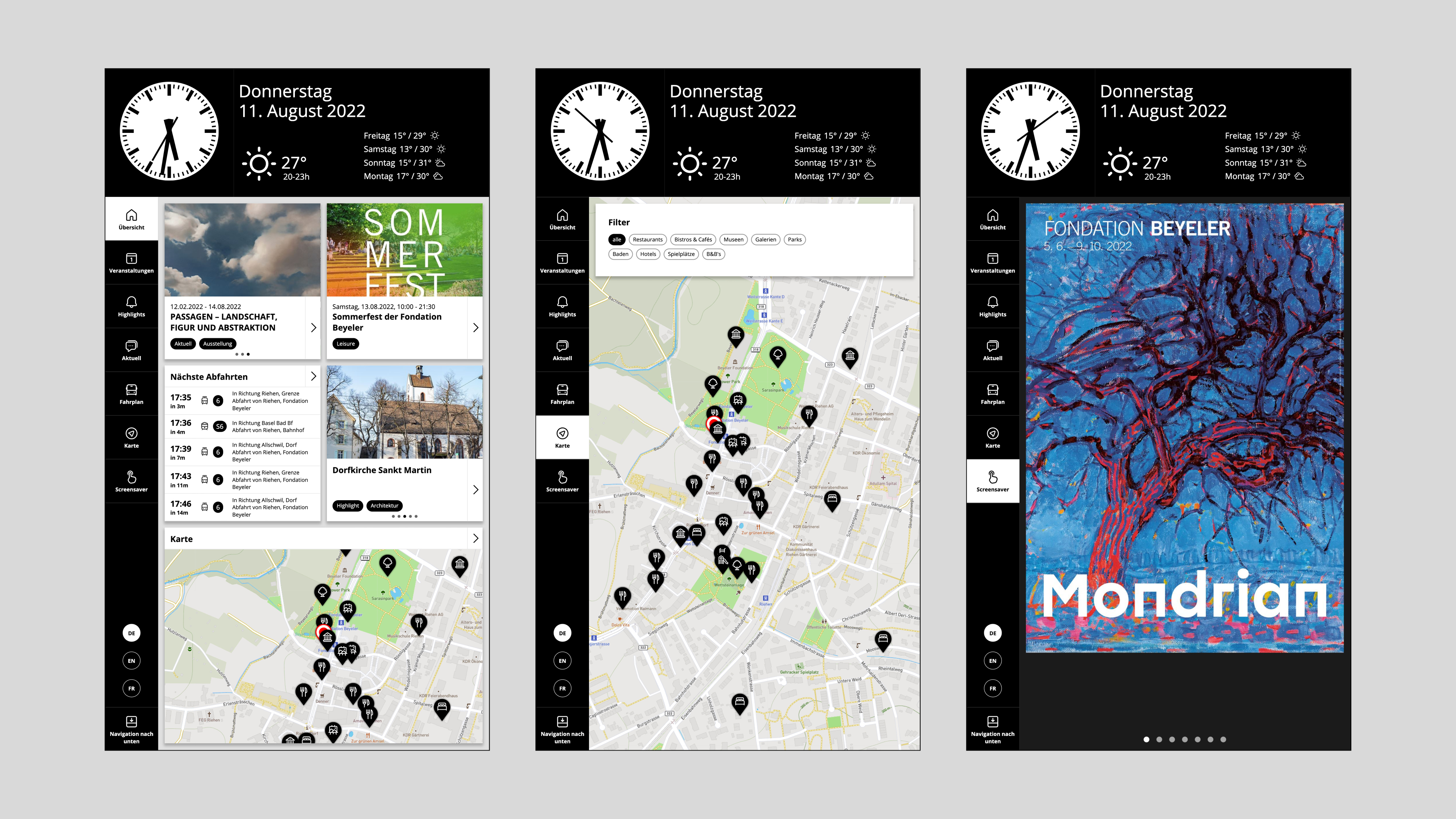
The municipality of Riehen now uses smart screens for community updates, transit info, and cultural highlights. We developed a city display module that integrates external feeds – event calendars, maps, live departures – while offering a lightweight CMS for digital posters and ads. Each screen’s frontend adapts to its physical context: touch-enabled in high-traffic zones, glanceable at bus stops. A simulated version is available online for quick previewing and validation of content; the physical units, built by BURRI public elements, are live across Riehen.

Interested in interactive displays?
Get in Touch

Digital Timetable and Infoscreen
for Municipality Lachen

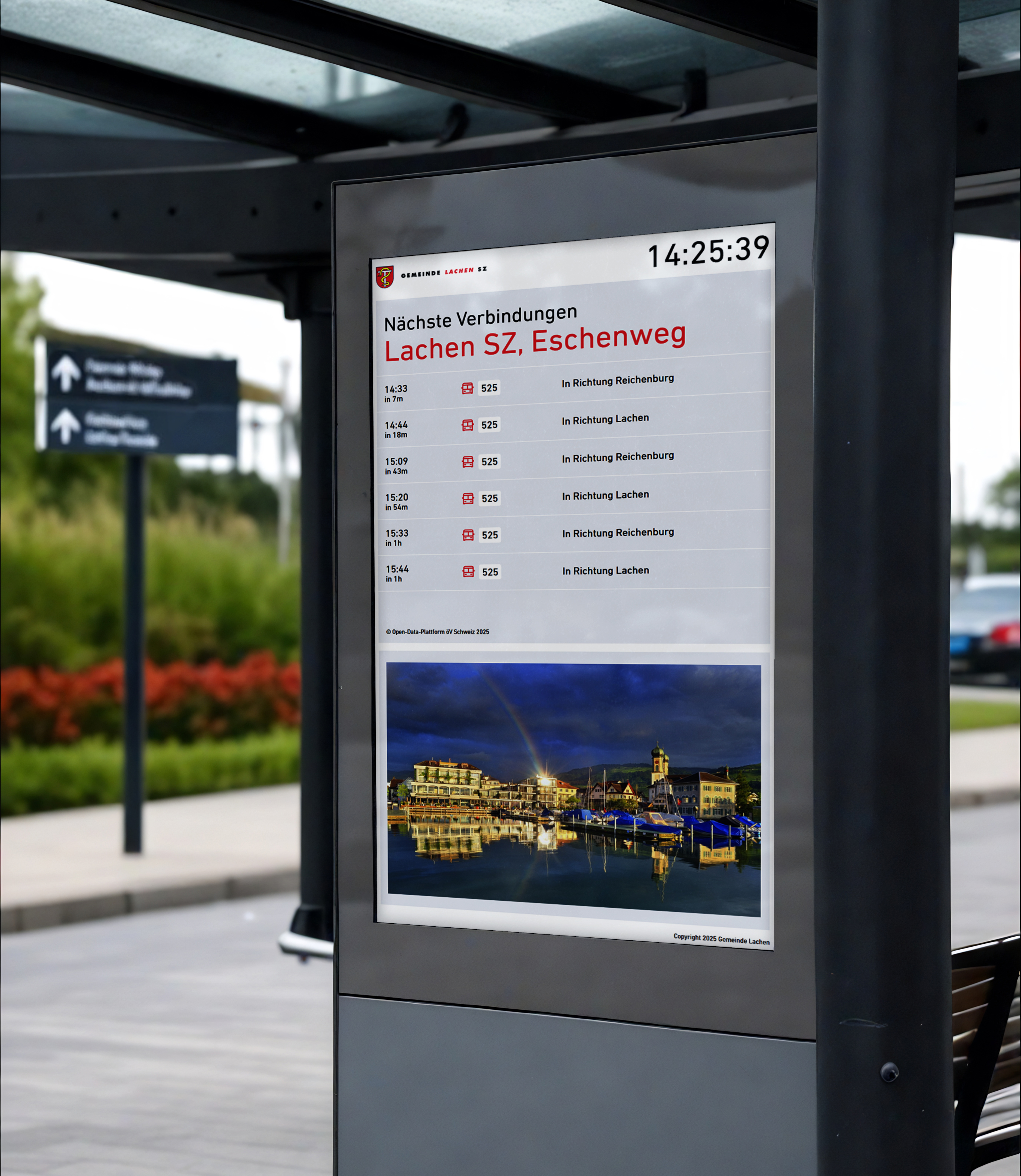
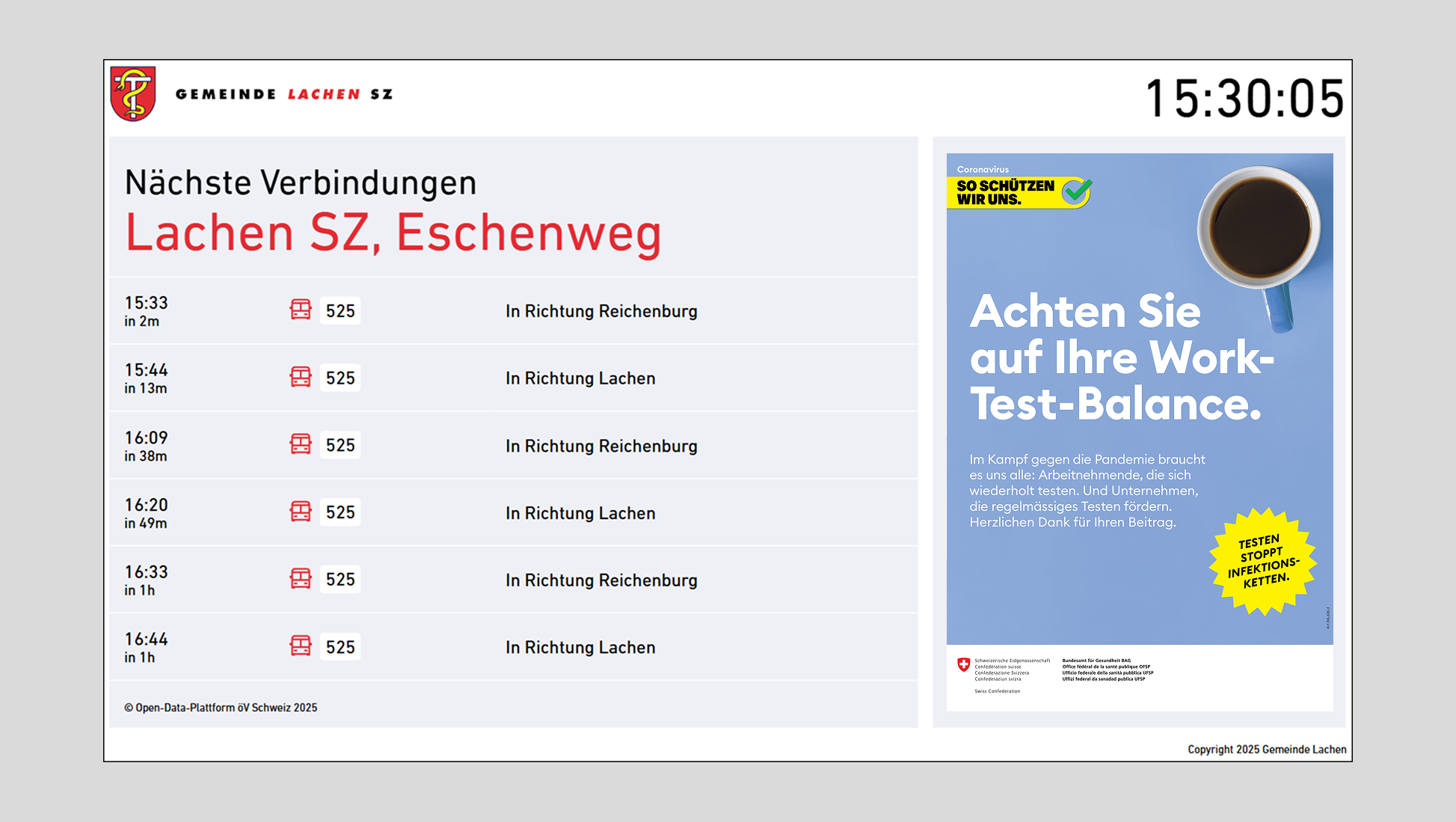
Lachen needed a lean, reliable solution for its bus stations. We delivered a lightweight timetable display that fetches real-time SBB data, including delays and service alerts, while letting administrators overlay local announcements via a easy-to-use CMS. Low hardware footprint, automatic updates, and clear hierarchy of information keep commuters informed without complexity. Cost-effective, instantly deployable, built to last.

We build custom solutions for information displays.
Contact Us

Technology

Our modular technology is engineered as a future-proof foundation rooted in modern web rendering standards. At its core lies a lightweight, headless screen rendering framework built on HTML5, CSS3, and modern JavaScript – delivering native web performance without proprietary plugins or locked-in formats. This ensures pixel-perfect fidelity across any resolution – from 8K mega-screens to compact e-ink panels. Because of its foundation in web technology, integration into existing systems couldn't be easier – the screen software can be hosted locally on the screen device, hosted by you on your existing web infastructure, or hosted by us in our Swiss Cloud infrastructure.

Screens and infodisplays can automatically check for configuration and content updates, allowing changings to be pushed remotely with ease and be instantly available within seconds. This system fails over gracefully if there is a connectivity problem, where the screen will continue to display its content that matches the schedule until it reconnects again.

Open Portable Code: Nerves always shares its code base with its clients. You own your product code so that you can easily take your developed products elsewhere or grow your own internal engineering team, if needed.

Hardware

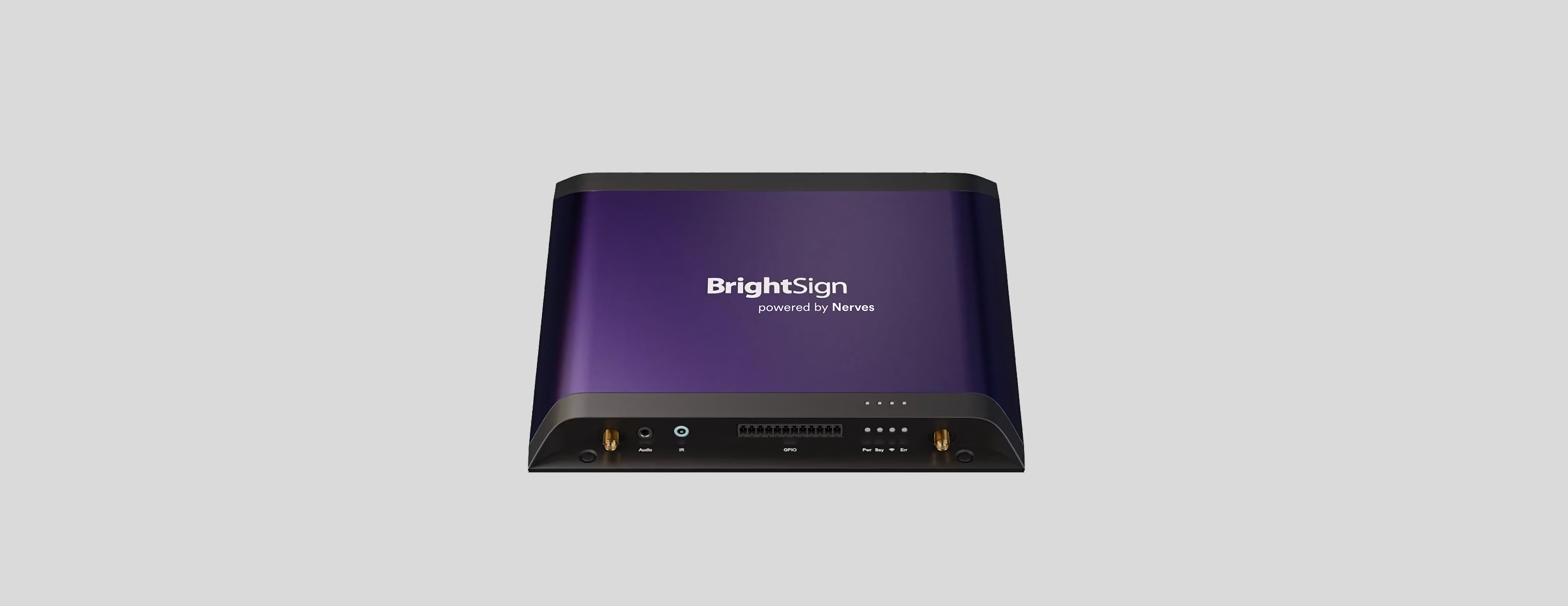
The screen software can be run on low-end hardware, including web browsers integrated directly in screens and TVs. We support common signage platforms such as BrightSign and Samsung Tizen. Deployment is as simple as loading a URL – no local installs, no firmware hacks. On BrightSign, we leverage the platform’s native Chromium engine for hardware-accelerated playback, pushing 4K at 60 fps with under 500 MB RAM. Samsung Tizen devices use the built-in web runtime, with remote content updates over the cloud. Both platforms inherit the full modular stack: live API polling, responsive reflow, and over-the-air configuration changes without reboot.

Future platforms? As long as they ship a standards-compliant browser, they’re supported on day one. From Raspberry Pi kiosks to Android-based totems, you can even reuse existing Windows displays. Hardware obsolescence becomes irrelevant: swap the box, keep the experience.

Budget Guidelines

Light

CHF 10K – 15K

For simple screens with minimal content and single source of data.


Medium

CHF 15K – 25K

For multiple screens with advanced content blocks and data sources.


Complex

CHF 25K – 50K

For screens with complex content including interactive modules and different screen sizes and formats.


While each project is unique, these budget recommendations will help you grasp an idea of the resources needed to realise a smart signage or infoscreen project.

Bring your own design, or let us develop it for you according to your branding.

Interested in digital signage & infoscreens?

Dan Krusi
Technology Lead
dan@nerves.ch

<